
Top 6 Advantages of D2C ECommerce That Every Brand Should Know


Did you know? India is the third-largest digital shopping country, followed by the United States and China. Currently, India has 1.4 billion internet users and 250 million online shoppers.
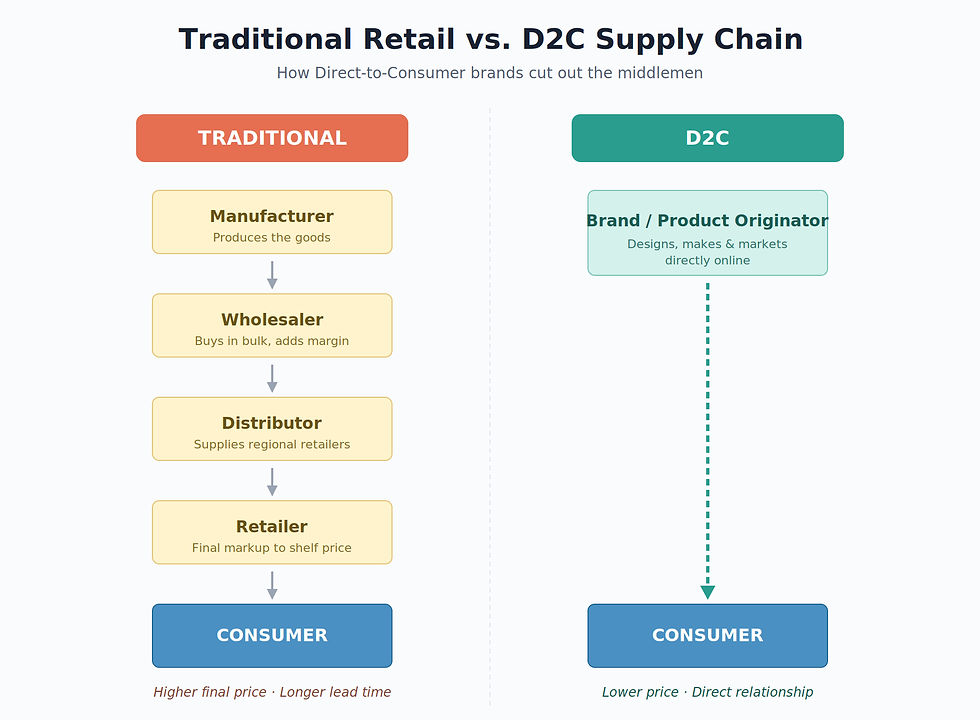
D2C ECommerce or digital-first brands directly use their own online platform to sell directly to their end consumers without the traditional distribution network of retailers, wholesalers, and stockists.
This blog will discuss the top 6 advantages of D2C Ecommerce that every brand should know.
What is D2C ECommerce
D2C ECommerce refers to the Direct-to-Consumer business model. It is a business model where manufacturers, retailers, or brands sell products directly to consumers through their own websites, social media, or third-party marketplaces. The D2C ECommerce business model enables companies to own the customer experience and insightful data.
In simple terms, the D2C strategy is about selling products or services directly to end consumers. Many organisations are embracing the D2C business model to reduce costs, boost customer experience, and increase profitability.
Top 6 Advantages of D2C ECommerce
In the industrial sector, D2C ECommerce has emerged as a significant shift, offering various advantages to businesses:
Increased control over customer experience
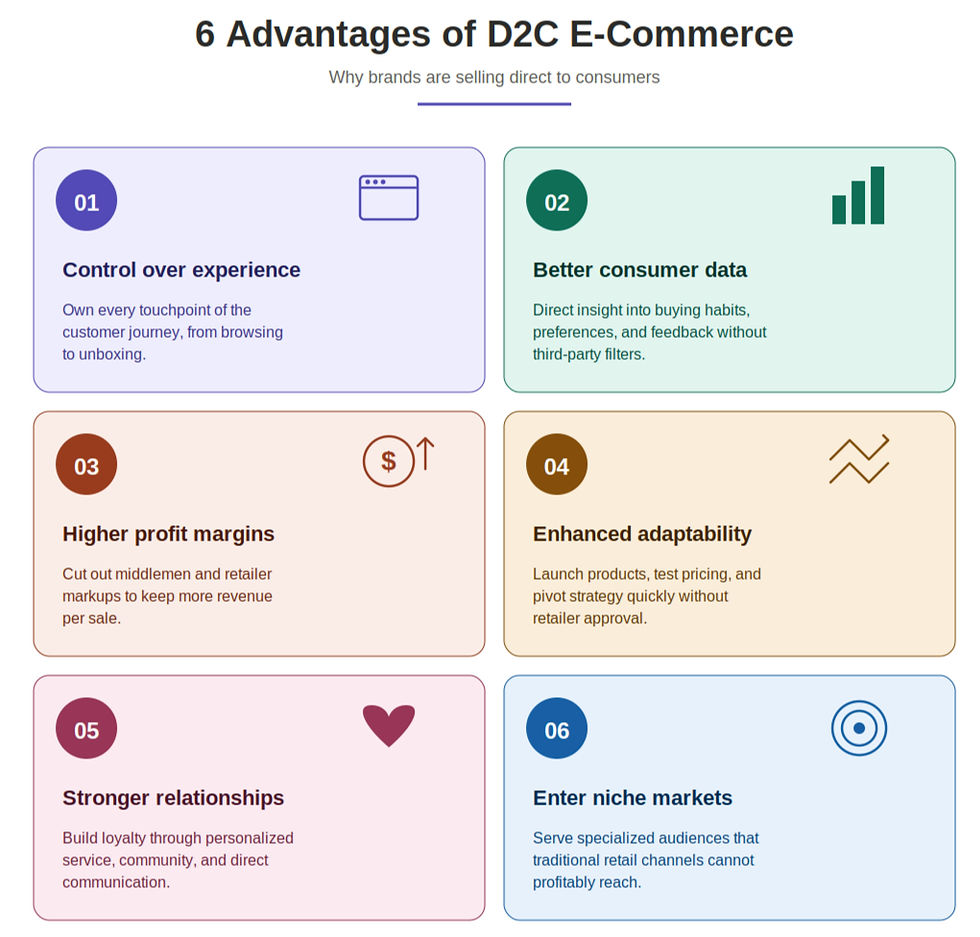
Through the D2C business model, businesses can control the entire customer journey by selling directly to consumers. Businesses can design and brand their own website. Moreover, they can control the packaging and delivery of their products.
Businesses can build trust and credibility with their customers by reflecting brand values.
Better access to consumer data
D2C ECommerce provides businesses with a competitive advantage through access to insightful customer data. Businesses collect valuable customer data by analysing the browsing and purchasing behaviours, preferences, and interests of customers.
With the help of customer data, businesses can leverage it to enhance the shopping experiences and craft targeted marketing campaigns. It can promote revenue growth and development.
Increased profit margins
Businesses have greater control over their products' pricing through the D2C ECommerce business model. Moreover, this business model eliminates traditional distribution channels such as wholesalers, distributors, and retailers.
D2C ECommerce gives businesses the ability to optimise operations and reduce inefficiencies. Businesses can reduce additional stock, improve processes, and reduce waste by managing the whole supply chain from manufacturing to delivery.
Enhanced adaptability
D2C ECommerce enables businesses to respond more swiftly to emerging consumer preferences. Moreover, the D2C business model facilitates easier pivoting to introduce new products, services, and pricing adjustments in alignment with market demands.
Adapting to market demands allows businesses to navigate risk factors such as changing consumer preferences, economic volatility, and disruptions in the supply chain.
Stronger customer relationships
D2C ECommerce fosters businesses to build stronger customer relationships by engaging with them and offering personalised recommendations and tailored solutions.
Businesses can respond effectively and quickly to customer inquiries and concerns by leveraging customer feedback and communication channels.
Entering niche markets
Businesses can target a specific market or customer segment through D2C ECommerce. At the same time, businesses can enhance social media platforms to target audiences in the niche market.
Future of D2C ECommerce
In recent years, D2C has moved beyond transactions into intelligent, experience-led commerce. The next wave is powered by AI-driven personalisation, conversational shopping, and predictive logistics that anticipate demand before it hits.
Brands will win not by selling products, but by owning customer relationships through zero-party data, community-led growth, and omnichannel storytelling across quick commerce, social, and marketplaces.
Sustainability, hyperlocal fulfillment, and voice-first discovery will redefine expectations. Founders who invest in unified tech stacks, agile supply chains, and authentic brand narratives will lead the pack.
At ECommNxt, we help D2C brands architect this future, scalable, data-driven, smart, and customer-obsessed.


Comments